Bat Removal in Blackfoot
Humane bat colony removal in Blackfoot, Idaho, the Bingham County seat between the Snake and Blackfoot rivers. We inspect the whole building, from century-old homes near Shilling Avenue to 1970s houses and fourplexes, install one-way exclusion at the right time of year, seal every opening, and put a written warranty on the work.
Bat activity in Blackfoot
Blackfoot sits at about 4,500 feet on the south side of the Snake River, about 25 miles south of Idaho Falls and 25 miles north of Pocatello on I-15. Settlers laid out the town in 1878 as the Utah and Northern Railway built north, taking the name fur traders had used for the area. The territorial legislature made it the Bingham County seat in 1885, and the city incorporated in 1901. In 1886 Alfred Moyes planted shade trees around the courthouse, and the tree-lined streets that followed earned Blackfoot the nickname "Grove City." Just south of town, the Blackfoot River marks the northern boundary of the Fort Hall Reservation of the Shoshone-Bannock Tribes, set by Executive Order in 1867. The 2020 census counted 12,346 residents, up from 11,899 in 2010.
Many of Blackfoot's landmarks are old masonry buildings. The Idaho Potato Museum occupies the stone Oregon Short Line depot on NW Main Street, built from 1912 to 1913 and listed on the National Register of Historic Places. The Bingham County Historical Museum is in the 15-room mansion John and May Brown built of local lava rock in 1905 on Shilling Avenue. The Eastern Idaho State Fair is held in Blackfoot, and the 6.5-mile Greenbelt runs from Jensen Grove Park along the Snake River. Jensen's Lake, the park's 55-acre pond, is filled from the Snake River; in April 2026 the city said it could not fill the lake that season after the state curtailed junior water rights.
Blackfoot's houses span more than a century. Census Bureau American Community Survey estimates put the city at about 4,817 housing units. Nearly 19% were built before 1940 and about 37% before 1960, mostly in the original grid around Main Street, Broadway and Shilling Avenue. About 18% went up in the 1970s, and about 21% have been built since 2000. Around 70% are detached single-family houses, about 13% are in three- and four-unit buildings, about 5% are manufactured homes, and about 70% of homes are owner-occupied.
On the older homes we usually find bats getting in where wood trim and soffits have shrunk away from brick, stone or lava rock, around old chimneys, at gable-end louvers, and where porches and additions meet the original roof. Mid-century and 1970s houses tend to leak at open soffit returns, torn gable-vent screens and gaps behind fascia boards. Fourplexes often share one attic across all units, so a colony that enters at one end can be heard by several households, and manufactured homes open up at skirting, roof seams and vent stacks. Newer homes on the edges of town usually leak at ridge-vent ends and where fascia meets stone veneer. Detached garages, shops, potato cellars and farm buildings around town are common roosts too.
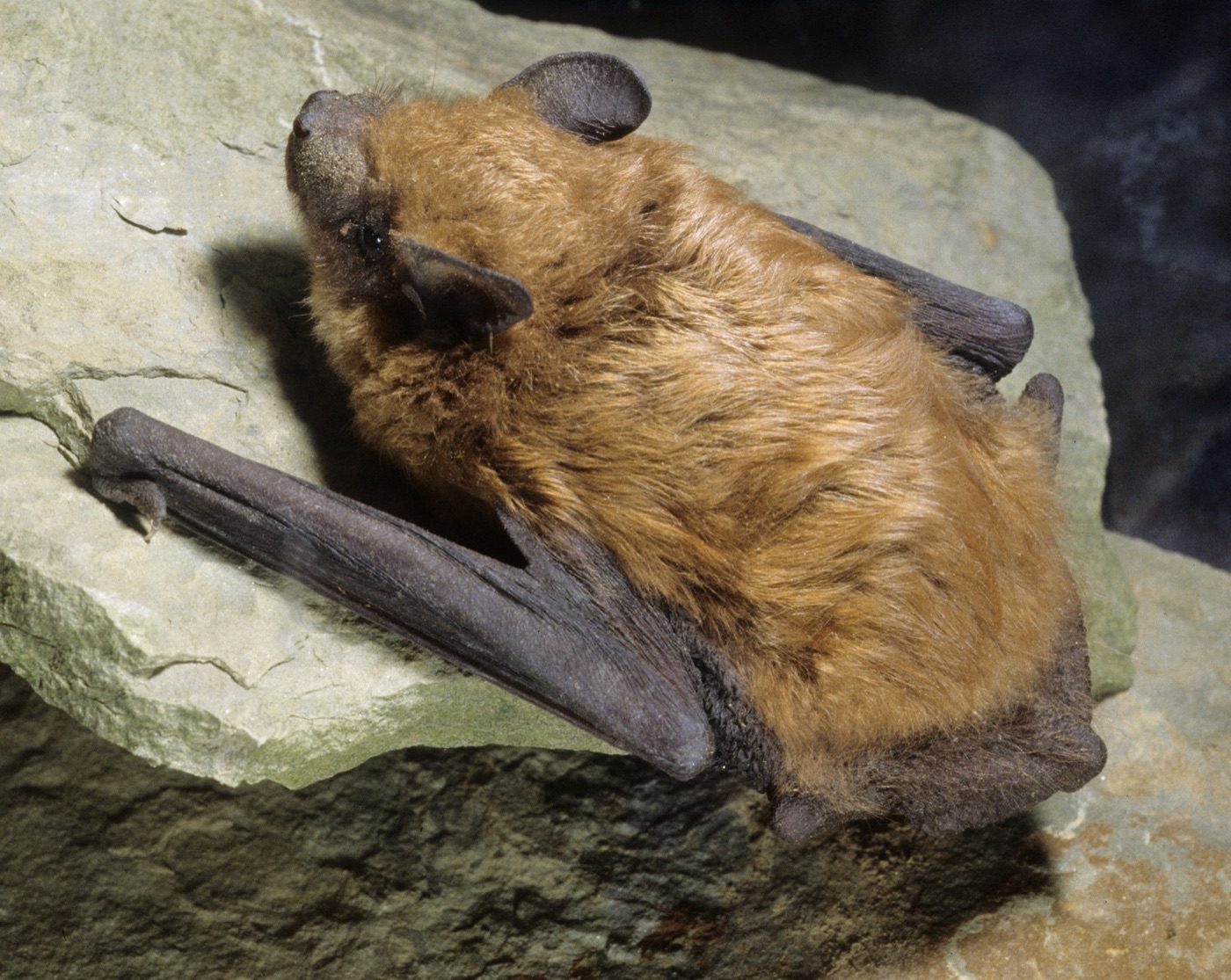
Idaho has 14 bat species. Idaho Fish and Game notes that big brown bats raise their young in summer colonies in attics, barns and other buildings, and that little brown bats like to forage over water, which the Snake River, the Blackfoot River and the irrigation canals around town supply on summer nights. Winters are cold and dry. NOAA's 1991–2020 normals for Blackfoot show an average January low of about 17°F, an average July high of about 87°F and about 12 inches of precipitation a year, with a record low of −40°F. Big brown bats are the ones most likely to stay in a heated building through the winter; our guide to bats in winter covers what to do if one turns up indoors.
Who handles what in Blackfoot
Blackfoot has its own police department, based in the county building at 501 N. Maple. The city routes animal control calls, in town and in the county, through Bingham County Dispatch, and the Blackfoot Animal Shelter on Frontage Road takes in stray dogs and cats. The Bingham County Sheriff's animal control officer handles domestic animals and does not take complaints about skunks or other wild animals. Southeastern Idaho Public Health (SIPH) runs the Bingham County health office in Blackfoot and handles rabies testing, and Idaho Fish and Game's Southeast Region, based in Pocatello, manages bats as protected wildlife in Bingham County. None of these offices removes bat colonies from private buildings; that is up to the owner.
Rabies and bats in Bingham County
Southeastern Idaho Public Health (SIPH) handles rabies questions for Bingham County. Its epidemiologists say bats are the only known natural reservoir of rabies in Idaho, that an average of about 15 rabid bats are found in the state each year, and that no part of Idaho is rabies-free. SIPH has confirmed rabid bats in Bingham County before, and on May 26, 2026 it reported the first rabid bat of the year in the state, in neighboring Bannock County. By September 2, 2026 the Idaho Department of Health and Welfare had counted 24 rabid bats statewide, more than in each of the prior three years. Most bats are not rabid, but you cannot tell by looking, and bites can go unnoticed. If a bat touched someone, or someone woke up with a bat in the room, call your doctor and SIPH at (208) 478-6303, contain the bat without bare hands, and do not let it go: SIPH sends bats to the state lab for testing. Our bats and rabies guide walks through the steps.
Local contacts for Blackfoot
- Southeastern Idaho Public Health, epidemiologists: (208) 478-6303, for rabies questions and testing after a bat bite, scratch or a bat found in a room where someone was sleeping. Bingham County office: 145 W. Idaho Street, Blackfoot, (208) 785-2160.
- Bingham Memorial Hospital: 98 Poplar St., Blackfoot, 24/7 emergency room, (208) 785-4100. For emergencies, dial 911.
- Bingham County Dispatch (animal control in Blackfoot and the county, and police after hours): (208) 785-1234.
- Blackfoot Police Department: 501 N. Maple, Suite 410, (208) 785-1235. Blackfoot City Hall: 157 N. Broadway, (208) 785-8600.
- Blackfoot Animal Shelter & Rescue: 199 Frontage Road, (208) 785-6897, open weekdays 10 a.m. to 3 p.m.
- Idaho Fish and Game, Southeast Regional Office: 1345 Barton Road, Pocatello, (208) 232-4703, for advice on bat colonies or injured bats in Bingham County.
Bat Removal in Blackfoot: our standard scope
Every bat colony removal job in Blackfoot runs to the same scope. No upsells, no surprise fees.
Full building inspection
We inspect the house, fourplex or shop plus any garage or outbuilding to locate every entry point, including trim gaps against brick and stone, chimneys, gable vents, ridge vents and manufactured-home skirting, before any work begins.
Custom exclusion devices
Each device is fitted to the specific opening. Bats exit naturally and cannot re-enter. No trapping, no poison.
Permanent sealing
After the colony leaves, we remove the devices and permanently seal every opening, including vents, fascia and soffit gaps, chimneys and roof-line openings.
Written warranty
If bats re-enter through any point we sealed, we return at no charge. Every exclusion in Blackfoot is warranted.
Blackfoot bat removal follows Idaho law and Idaho Fish and Game timing advice
Idaho Fish and Game rules (IDAPA 13.01.06.200) list all bat species as protected nongame wildlife, and Fish and Game says it is illegal to harm, harass or kill them, so poison, glue boards and trapping are out. The legal way to get a colony out of a house, fourplex or shop is humane one-way exclusion, followed by sealing every opening once the bats have left.
Idaho does not set a legal exclusion calendar. Idaho Fish and Game advises that, unless bats are getting into living spaces, the best time to evict them from a building is early September to mid-October, after the maternity season and before hibernation. Big brown bat pups are born from about May to early July and little brown bat pups around June, and they cannot fly for several weeks, so a one-way door during that time can trap them inside. This is guidance to protect pups, not a summer ban. Southeastern Idaho Public Health gives the same advice: bat-proofing is best done after the bats leave in the fall. If bats are getting into living areas of a Blackfoot home or fourplex in summer, we seal those interior gaps right away and plan the full exclusion for fall; spring work before the colony returns is another option, and we inspect year-round. Call (307) 522-1433 to talk through timing, or read our when to exclude bats guide.
Bat Colony Removal in Blackfoot, done right
Blackfoot is a short run down I-15 from Idaho Falls and Shelley, where we already work, so it fits our regular eastern Idaho trips. Whether it is a 1920s brick bungalow near downtown, a 1970s rambler, a fourplex or a shop full of bats, we bring the same inspection standard and the same written warranty to every job.
A phone consultation costs nothing. Call (307) 522-1433 and describe your situation. We will tell you what you are likely dealing with, what the work involves, and what the timing looks like.
What to expect
- Phone consultation included
- Teton region service (WY + ID)
- Fully insured
- Written warranty on exclusion work
- Compliant with Idaho and federal law
- No trapping, no poison
Bat Colony Removal in Blackfoot: common questions
Who do I call in Blackfoot if a bat touched someone or was in a bedroom?
Call your doctor and Southeastern Idaho Public Health at (208) 478-6303 right away; SIPH sends bats to the state lab for rabies testing, and its Bingham County office is at 145 W. Idaho Street in Blackfoot, (208) 785-2160. For an emergency dial 911; Bingham Memorial Hospital at 98 Poplar St. has a 24/7 ER, (208) 785-4100. If you can contain the bat without bare hands, do not let it go.
Will Blackfoot animal control remove bats from my house?
No. The City of Blackfoot routes animal control calls in the city and the county through Bingham County Dispatch at (208) 785-1234, and the Blackfoot Animal Shelter on Frontage Road handles dogs and cats. The sheriff's animal control officer does not take complaints about skunks or other wild animals. Bats are protected wildlife managed by Idaho Fish and Game's Southeast Region in Pocatello, (208) 232-4703. Removing a colony from a home is up to the owner, and that is the work we do.
Why do older Blackfoot homes get bats?
About 37 percent of Blackfoot's homes were built before 1960, and nearly one in five before 1940, according to Census Bureau estimates. On those houses wood trim and soffits shrink away from brick, stone and siding, gable-vent screens tear, and chimney flashing loosens. The 1970s houses, about 18 percent of the city, often leak at soffit returns and behind fascia boards, and fourplexes can share one attic across several units.
When can bats be excluded from a Blackfoot home?
Idaho Fish and Game recommends early September to mid-October, after the pups can fly and before hibernation, unless bats are getting into living spaces. That is timing advice to protect pups during the maternity season, not a legal summer ban. Southeastern Idaho Public Health also says bat-proofing is best after the bats leave in the fall. We can seal interior gaps any time, work in spring before the colony returns, and inspect year-round.
Do you really serve Blackfoot from Jackson?
Yes. Blackfoot is about 25 miles south of Idaho Falls on I-15, roughly 115 miles from Jackson by way of Teton Pass and Swan Valley, and we already work in Idaho Falls, Shelley and Firth. We schedule eastern Idaho trips so the inspection and exclusion fit the right window. Call (307) 522-1433 for a phone consultation.
Other bat services we provide in Blackfoot
Bat-Proofing
Professional bat-proofing in Blackfoot, ID. Written warranty included.
Bat-Proofing across the Teton regionGuano Cleanup
Professional guano cleanup in Blackfoot, ID. Written warranty included.
Guano Cleanup across the Teton regionCommercial Bat Removal
Professional commercial bat removal in Blackfoot, ID. Written warranty included.
Commercial Bat Removal across the Teton regionBat Colony Removal across the Teton region
We serve both sides of the Tetons: Wyoming and Idaho.
Firth & Basalt, ID
Bat removal in Firth and BasaltShelley, ID
Bat removal in ShelleyIdaho Falls, ID
Bat removal in Idaho FallsAmmon, ID
Bat removal in AmmonWhen to exclude
When to exclude batsBats in winter
Bats in winter in Jackson HoleBats & rabies
Bats and rabies guideWhere these facts come from
Contact details and local facts on this page were checked against these official and local sources on November 28, 2026. Phone numbers and hours can change, so confirm with the agency before you go.
- Southeastern Idaho Public Health (May 26, 2026): Rabid bat found in Bannock County (first rabid bat of 2026 in southeast Idaho and the state; epidemiologists 208-478-6303)
- Southeastern Idaho Public Health: Rabies (SIPH sends animals to the Idaho Bureau of Laboratories for testing; bats can be submitted whole)
- Southeastern Idaho Public Health: County office locations (Bingham County office, 145 W Idaho Street, Blackfoot, 208-785-2160; main office 208-233-9080)
- Idaho State Journal: Rabid bat found in Bingham County (Southeastern Idaho Public Health release)
- Idaho Department of Health and Welfare (Sept. 2, 2026): Idaho reports increase in rabid bats
- Bingham Memorial Hospital: Emergency Department (24/7 ER, 98 Poplar St., Blackfoot, 208-785-4100)
- City of Blackfoot: Blackfoot Animal Shelter & Rescue (199 Frontage Road, 208-785-6897, weekdays 10–3; animal control in the city or county through Bingham County Dispatch 208-785-1234; City Hall 157 N Broadway, 208-785-8600)
- City of Blackfoot: Police Department (501 N Maple, Suite 410, 208-785-1235; after hours Bingham County Dispatch 208-785-1234)
- Bingham County Sheriff's Office: Animal Control (one officer, Mon–Fri 8–4; does not take skunk or other non-domesticated animal complaints)
- Bingham County, ID: Sheriff (501 North Maple Street, Blackfoot; main desk 208-785-4440; non-emergency dispatch 208-785-1234)
- Bingham County, ID: About Bingham County (established 1885, county seat Blackfoot; communities include Shelley and Firth)
- IDAPA 13.01.06.200: Protected nongame species (Bats, all species)
- Idaho Fish and Game: See a bat in or around your home? Don't panic
- Idaho Fish and Game: Southeast Regional Office, Pocatello
- Idaho Fish and Game: County: Bingham (Southeast Region)
- Idaho Fish and Game: Idaho's Bats pocket guide (14 species; big brown bat maternity colonies in attics and barns, pups May to early July)
- Idaho Fish and Game: Wildlife Express, Bats (October 2019; little brown myotis pups born about June and flying at about three weeks)
- Census Reporter: Blackfoot, ID profile and ACS 2024 5-year tables B25034, B25024, B25003 (about 4,817 housing units; year built, units in structure, tenure)
- Wikipedia: Blackfoot, Idaho (founded 1878, county seat 1885, incorporated 1901, "Grove City" shade trees 1886, 2020 census 12,346, NOAA 1991–2020 Blackfoot normals)
- Idaho Potato Museum: The museum (former Oregon Short Line depot, built October 1912 to August 1913, 130 NW Main Street)
- National Park Service NPGallery: Blackfoot Railway Depot, National Register of Historic Places (listed 1974)
- Bingham County Historical Society: Museum (1905 John G. and May Brown mansion of local lava rock, 190 N. Shilling Avenue)
- City of Blackfoot: Greater Blackfoot Area Greenbelt brochure (6.5-mile trail, Jensen Grove Park, 55-acre Jensen's Lake, Snake River)
- KIFI Local News 8 (Apr. 29, 2026): Jensen Grove to remain dry despite infrastructure repairs (state water-right curtailment)
- U.S. Senate Report 113-242: Blackfoot River land exchange (Fort Hall Reservation set by 1867 Executive Order with the Blackfoot River as its northern boundary)
Teton region bat removal, done right.
Serving Blackfoot, Shelley, Firth and the full Teton region since 2011. Phone consultation included. Written warranty on every exclusion.