Bat-Proofing & Exclusion
Bat-proofing for homes, cabins and condos in Jackson Hole, Teton Valley and Star Valley. We find every gap a bat can use, let the colony out with one-way devices at the right time of year, then seal the house with materials chosen for heavy snow, ice and -30°F winters, and put a written warranty on every opening.
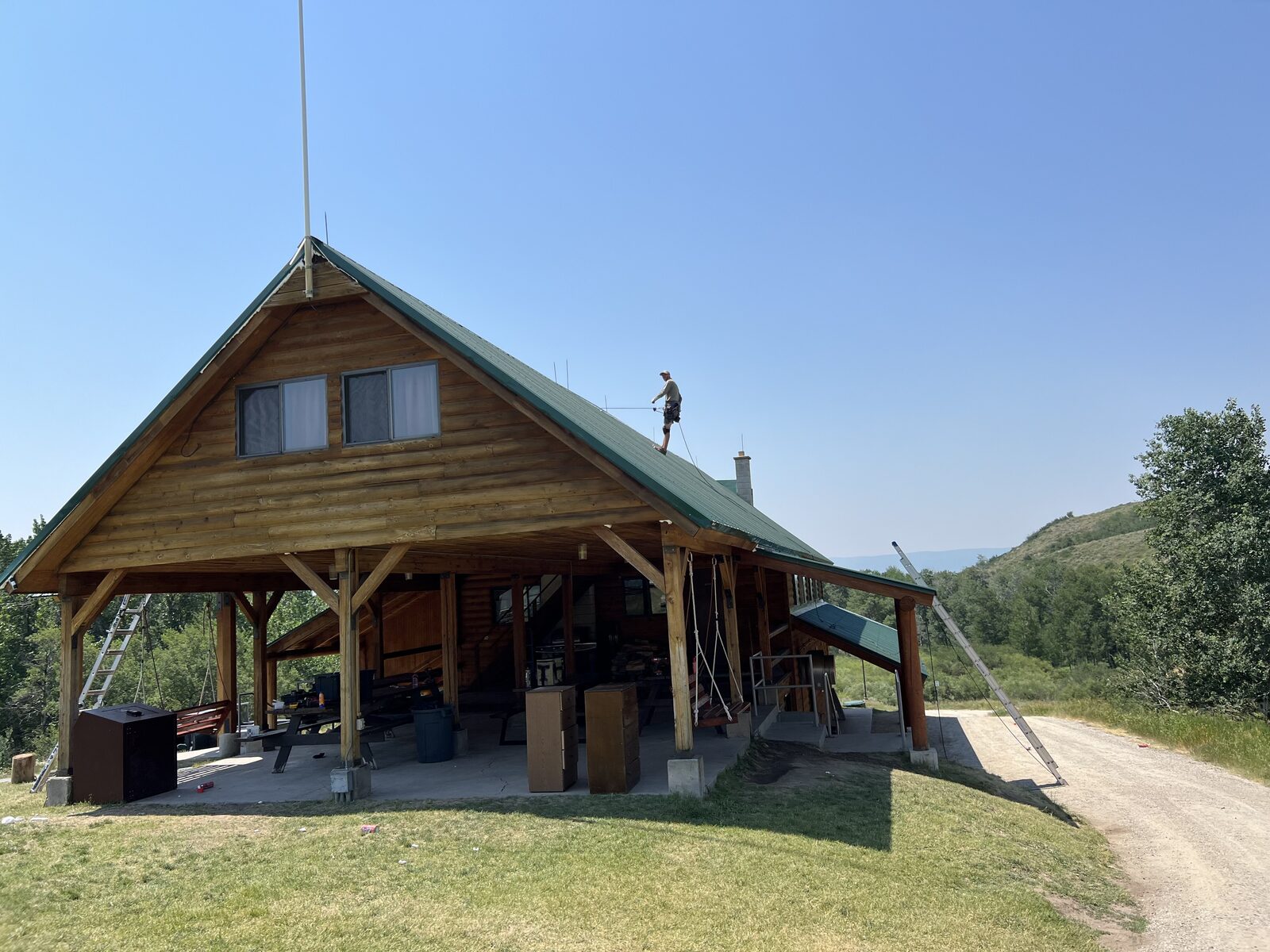
Every bat-proofing job, the same standard
No upsells and no surprise fees. Every job runs to the same scope.
Whole-house inspection
Roofline, ridge caps and vents, fascia and soffits, gables, chimneys, log ends and chinking, decks and additions, and any garage or outbuilding. We note droppings and stains so we know which gaps the colony actually uses.
One-way exclusion, timed right
Devices go over the active entries only when the pups can fly, so bats leave on their own and cannot get back in. No trapping, no poison.
Seal for our climate
Hardware cloth, flashing, foam closure strips under metal ridge caps, chimney caps, backer rod and flexible sealant or chinking matched to the house, fastened to stay put through snow slides and freeze-thaw.
Written warranty
Every sealed opening is warranted. If bats get back in through a point we closed, we return and fix it at no charge.
Why bats get into Teton region homes
Two species do most of it. The Park Service lists little brown bats as the most common bat in Grand Teton National Park, followed by big brown bats, and in Wyoming surveys cited in Wyoming Game and Fish's bat conservation plan, 19 of 20 little brown bat maternity roosts and all 3 big brown bat maternity roosts were in buildings. Game and Fish says pups are born from May through July. The females return to the same building each summer, and big brown bats are the species most likely to stay in a heated building through the winter.
Our weather is hard on the parts of a house that keep bats out. Teton County, Wyoming builds to a -30°F winter design temperature with severe weathering, and it requires an ice shield under roofing. Across the pass, the City of Driggs designs for an 85-pound-per-square-foot ground snow load and a 36-inch frost depth. Every winter, sliding snow, ice dams and deep cold work at the same joints: fascia boards, drip edges, ridge caps, chimney flashing, and the chinking on log walls. A gap that was tight in October can be open by May, which is when the colony comes back.
Many homes also sit empty for part of the year. In the Census Bureau's 2020–2024 American Community Survey, about 3,076 of 13,658 housing units in Teton County, Wyoming (about 23 percent) and 1,428 of 6,481 in Teton County, Idaho (about 22 percent) were held for seasonal, recreational or occasional use. A colony can raise pups in a second home or cabin all summer with no one there to notice the evening flights or droppings on the deck.
Common entry points by house type in the Teton region
- Log and timber homes. Chinking that pulls away as logs settle and season, checks in log ends, and the joint where log walls meet the roof and gable framing. See bats in log homes and cabins for how we work on round logs.
- Metal roofs. Standing-seam and corrugated roofs are common here because they shed snow. Bats use the open ends of ridge caps, gaps where foam closures have shrunk or were never installed, and the space behind gable trim.
- Mountain-modern and newer custom homes. Gaps where fascia or soffit meets stone veneer, open ends of ridge vents, and joints where one roof plane meets another on complex rooflines.
- Condos and townhomes. In Jackson, Teton Village and Driggs, several units often share one attic or a long soffit, so a colony that enters at one end can be heard down the building. Sealing has to be planned with the HOA for the whole roofline.
- Older frame homes and farmhouses. In Jackson's older neighborhoods, Teton Valley and Star Valley, trim shrinks away from siding, gable-vent screens tear, and chimney flashing loosens. Barns, shops and detached garages are common roosts too.
Most gaps bats use are about a half inch, the size the Pennsylvania Game Commission's exclusion guide gives, so we look closely at every joint, not just the obvious holes. On the Idaho side, Southeastern Idaho Public Health describes the same idea: bats can get through a hole about the size of a quarter.
How a bat-proofing job runs
- Inspect. We go over the full exterior, from the ladder or the roof as needed, and the attic where we can reach it. Droppings, rub marks and stains show which openings are active.
- Seal what bats are not using. Inactive gaps are closed first, so the colony is left with only its main entries.
- Exclude. One-way devices go over the active entries. Bats leave at dusk to feed and cannot get back in. On rough surfaces like log walls, the Game Commission notes that exclusion tubes seal better than flat netting.
- Seal for good. Once the bats are gone, the devices come off and the openings are sealed with materials matched to the house and our winters. Then we check the whole roofline again.
- Clean up and warranty. Droppings and soiled insulation can be removed afterward; see guano cleanup. Every sealed opening is covered by a written warranty.
Timing
Wyoming Game and Fish advises installing one-way doors in late summer or early fall, because earlier in the summer they can separate mothers from pups that cannot fly yet. That is timing guidance, not a legal summer ban. In Idaho, Idaho Fish and Game recommends evicting bats from early September to mid-October, and Idaho rules (IDAPA 13.01.06.200) list all bats as protected nongame wildlife. We plan around the pup season, roughly June through mid-August, exclude in spring before the colony returns or from mid-August through October, and inspect and seal unused gaps year-round. Winter work is for finding gaps; our winter guide explains why a bat inside in January needs a different plan. The full calendar is in when to exclude bats in Teton County.
If a bat gets into your living space
Bat-proofing keeps bats in the attic and walls out of the house, but if a bat is already inside, do not touch it. Close the room and keep children and pets out. If anyone touched it or was asleep in the room, keep the bat for testing and call public health:
- Teton County, WY Health Department, Environmental Health: 307-732-8490.
- Eastern Idaho Public Health (Teton Valley), infectious disease line: (208) 533-3152.
- Lincoln County Public Health (Star Valley), Afton office: 307-885-9598.
- Sublette County Public Health, Pinedale: (307) 367-2157.
- Wyoming Game and Fish, Jackson Regional Office: (307) 733-2321, for injured bats or questions about bats as wildlife.
For building permits on larger repairs, Teton County, Idaho's Building Department is in the courthouse in Driggs at (208) 776-8171. For the rabies steps, see bats and rabies in Teton County. For local details, see our pages for Jackson, Wilson, Teton Village, Driggs and Victor. Call (307) 522-1433 to book an inspection.
Bat-proofing: common questions
How small a gap can a bat use to get into my house?
About a half inch. The Pennsylvania Game Commission's guide to bat exclusion says bats can use openings that small, so a gap you can slide a finger into is enough. In our area the usual spots are the open ends of ridge vents and metal-roof ridge caps, gaps where fascia meets stone veneer or log ends, gable-vent screens, loose chimney flashing and settling chinking on log homes.
Can you bat-proof my house in summer while bats are inside?
We can inspect and seal gaps that bats are not using at any time of year, and we seal right away any gap that lets bats into living space. The colony's own entry is a different matter. Wyoming Game and Fish advises installing one-way doors in late summer or early fall, after pups can fly, and Idaho Fish and Game recommends evicting bats from early September to mid-October. That is guidance to avoid trapping flightless pups, not a legal summer ban, and it is how we plan the work.
Is bat-proofing different in Jackson Hole than in other places?
The bats are the same, but the houses and weather are not. Teton County, Wyoming designs for a -30°F winter temperature and severe weathering and requires an ice shield on roofs, and Driggs designs for an 85 psf ground snow load. Snow sliding off roofs, ice dams and deep cold pull at fascia, flashing, ridge caps and chinking every winter, so we use materials and fasteners that hold up to that and recheck the spots that move.
Do I need bat-proofing if I have never seen bats?
Not always, but it is worth an inspection if your house has signs: droppings below a gable, ridge or deck, stains at a gap, or squeaking at dusk. About 23 percent of homes in Teton County, Wyoming and 22 percent in Teton County, Idaho are seasonal or occasional-use homes, according to the Census Bureau, so a colony can live in a second home all summer before anyone sees it. Winter is a good time to find and close gaps that bats are not using.
What does your bat-proofing warranty cover?
Every opening we seal is covered by a written warranty. If bats get back in through a point we closed, we come back and fix it at no charge. Call (307) 522-1433 to talk through warranty terms for your home, including questions about selling the house.
Bat-proofing across the Teton region
Homes on both sides of Teton Pass and down through Star Valley.
Log homes
Bats in log homes and cabinsGuano cleanup
Bat guano cleanupWhen to exclude
When to exclude batsBats in winter
Bats in winter in Jackson HoleJackson, WY
Bat removal in JacksonTeton Village, WY
Bat removal in Teton VillageDriggs, ID
Bat removal in DriggsCommercial
Commercial bat removalWhere these facts come from
Contact details and local facts on this page were checked against these official and local sources on November 28, 2026. Phone numbers and hours can change, so confirm with the agency before you go.
- Wyoming Game and Fish Department: A Conservation Plan for Bats in Wyoming (Hester & Grenier 2005; 18 species: 12 resident, 4 peripheral, 2 accidental; species accounts incl. Priday & Luce 1999 roost records)
- Wyoming Game and Fish Department: Bats in Wyoming overview (18 species, 12 residents; 10 of 12 residents are Species of Greatest Conservation Need; pups born May through July; habitat-use table incl. buildings)
- Wyoming Game and Fish Department: What should I do if I find a bat?
- National Park Service, Grand Teton: Wildlife and Rabies (bat species in the park, what to do with a bat in your room)
- National Park Service: Bat Projects in Parks, Grand Teton National Park
- Teton County, WY Building: Climatic and geographic design criteria (-30°F winter design temperature, severe weathering, ice shield required, Climate Zones 7 and 8 ceiling R-60)
- City of Driggs, ID: Building permit applications and requirements (ground snow load 85 psf, 36-inch frost depth, Idaho climate zone 6B, 2018 I-Codes)
- Teton County, ID: Building Department (Teton County Courthouse, 150 Courthouse Drive, Room 107, Driggs, 208-776-8171; 2018 I-Codes)
- U.S. Census Bureau ACS 2020–2024 5-year, table B25004 Vacancy Status, via Census Reporter (seasonal, recreational or occasional-use homes in Teton County, WY and Teton County, ID)
- Pennsylvania Game Commission: Bats in Buildings, A Guide to Safe & Humane Exclusions (half-inch openings; exclusion tubes work best on rough walls such as log cabins)
- National Park Service Preservation Brief 26: The Preservation and Repair of Historic Log Buildings (chinking and daubing, checks, settlement, seasonal expansion and freeze-thaw)
- Southeastern Idaho Public Health: Rabies (SIPH sends animals to the Idaho Bureau of Laboratories for testing; bats can be submitted whole)
- Idaho Fish and Game: See a bat in or around your home? Don't panic
- IDAPA 13.01.06.200: Protected nongame species (Bats, all species)
- Teton County, WY Health Department: Rabies
- Eastern Idaho Public Health: Office locations and infectious disease line (208) 533-3152
- Lincoln County, WY: Public Health contact (Kemmerer office 520 Topaz St, Ste 109, 307-877-3780; Afton office 307-885-9598)
- Sublette County, WY: Public Health (380 Faler Avenue, Pinedale, 307-367-2157)
- Wyoming Game and Fish Department: Jackson Region
Teton region bat removal, done right.
Serving Jackson and the full Teton region since 2011. Phone consultation included. Written warranty on every exclusion.