When to exclude bats in Teton County
Wyoming Game and Fish says one-way doors are best in late summer or early fall. Here is how that advice applies to Jackson Hole mountain homes—Wilson, Teton Village, Jackson, and the rest of Teton County—without treating WGFD timing as a legal “restriction.”
Exclusion timing for Jackson Hole homes
Best window: Wyoming Game and Fish says one-way doors are best used in late summer or early fall, after maternity season. On this site we also treat spring (March–May) and late summer through fall (August 15–October) as the workable windows for Teton County buildings.
Avoid summer sealing of the roost: Roughly June through mid-August, flightless pups are in the roost. One-way doors then can separate mothers from young that cannot survive alone.
One-way exits need warm nights: Leave devices up at least five nights, including three consecutive nights above about 50°F with light wind and no heavy rain (standard NWCO / Bat Conservation International practice). At 6,100–6,300 feet, cold snaps are common—those nights do not count.
Winter is usually the wrong time: Hibernating or torpid bats may not leave; prefer late summer / early fall or spring.
During pup season you can still protect living spaces while you wait for the right exclusion window.
What Game and Fish says about timing
Wyoming Game and Fish’s “What should I do if I find a bat?” guidance is clear on exclusion timing: if bats are in unused parts of a building such as an attic, installing one-way doors for about a week lets bats fly out but not back in, and those doors “are best-used in the late summer or early fall.” Over the summer, the same page warns, females may become separated from their young (pups) by a one-way door; pups cannot fly and need to nurse several times each night, so they will not survive alone.
Separately, the Nongame mammals page says the Nongame Section can advise homeowners on excluding bat colonies from attics and other inappropriate places, and that “whenever possible, we advise doing so outside of the maternity season” to minimize contact risk and bat mortality and to make exclusion more effective. Game and Fish does not publish a fixed maternity calendar for every county. In practice across Teton County we treat maternity avoidance as roughly June through mid-August, and we schedule full exclusions for spring (March–May) or late summer through fall (August 15–October)—language that matches the late-summer / early-fall recommendation without inventing a WGFD date list or calling it a legal “restriction.”
For building problems with bats, Game and Fish’s urban and nuisance wildlife page directs people to the Nongame Program at the Lander Regional Office, (307) 332-2688. The Jackson Regional Office is at 420 North Cache, (307) 733-2321.
Why not to seal the roost in summer
Pups stay behind in the roost while mothers forage at night. They cannot leave through a one-way door on their own until they can fly. Closing the only exits during that period can kill the young inside walls or attics. If you are hearing bats in June or July in a Wilson, Teton Village, or Jackson building, the right moves are: keep people and pets away from any loose bat, follow public health steps if there was possible contact (see our bats and rabies in Teton County guide), seal gaps from the roost into living space only, and schedule a full exclusion for after the pups can fly.
Winter guide: Bats in winter in Jackson Hole, covering hibernation, a bat in the house in winter, and white-nose syndrome in the Tetons.
If bats are repeatedly entering living spaces, that is a public-health issue first. Call us at (307) 522-1433 and we will plan careful work with living-space protection first.
One-way exclusion, the ~50°F rule, and Teton County specifics
A proper exclusion starts with a full inspection of the roofline, vents, chimney, soffits and siding. Secondary gaps are sealed; active exits get custom one-way devices so bats can leave but cannot return. After the colony is out, every gap is sealed permanently and the work is backed by a written warranty.
Because not every bat leaves every night, Acceptable Management Practices for bat control in structures (Bat Conservation International and multi-state NWCO guidance used across the country) say one-way exits should stay up at least five nights, including at least three consecutive nights of weather conducive to flight: temperatures above about 50°F, winds below roughly 10 mph, and no sustained or heavy rain. Cold fronts and storms do not count. Wyoming Game and Fish does not publish a separate degree-day rule, so we follow that national practice when we time removals from Jackson Hole west-bank homes to ski-village condos.
Teton County buildings add a few local wrinkles. Wilson and west-bank log homes open at chinking, corners, and fascia. Teton Village condominiums and lodges often share one attic across many units, so one call can mean a whole-building job coordinated with an HOA or resort manager. Vacation and second homes may sit empty for weeks, which can delay discovery of a colony until guests return. Elevation keeps nights cool even in August; we watch the forecast before counting warm nights toward the five-night minimum.
Winter caveats at Jackson Hole elevation
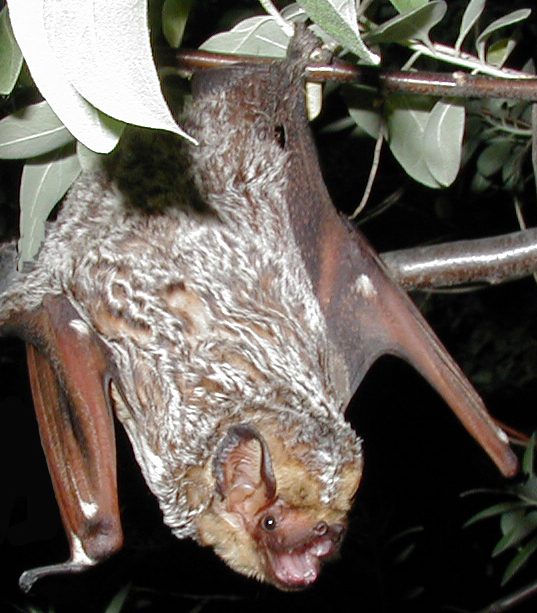
By late fall, Jackson Hole is often too cold for reliable exclusion flights. Hibernating or torpid bats may be unable to exit through devices. Big brown bats sometimes overwinter in heated buildings. Trying to exclude when bats are cold-torpid can leave animals stuck.
In practice we confirm the colony is still using the exits, check the multi-day forecast against the warm-night rule, and delay work when a cold snap would leave bats stuck. Spring, once bats are active again and nights stay above about 50°F, is often a workable second window before the next maternity season.
What not to do
Do not use poisons, sticky traps, or seal bats inside a roost. Wyoming Game and Fish notes that keeping or rehabilitating a bat without a permit is illegal. The lasting fix is inspection, timed one-way exclusion, full bat-proofing, and guano cleanup when droppings have built up. Learn which bat species live in Wyoming, and start with our Teton region bat removal service.
This guide summarizes published Wyoming Game and Fish guidance and widely used national exclusion practices for homeowners. For a specific building, call (307) 522-1433 for a phone consultation so we can match the plan to the colony and the forecast.
Common questions
When can bats be excluded from a Teton County house?
Wyoming Game and Fish says one-way doors are best used in late summer or early fall, after maternity season. Its Nongame Program advises excluding colonies outside the maternity season whenever possible. Spring can also work once bats are active. We avoid roughly June through mid-August.
Is there a legal summer exclusion ban in Wyoming?
No. Wyoming Game and Fish publishes timing advice—late summer or early fall for one-way doors, and excluding outside maternity season whenever possible. That is not the same as a published legal "restriction" calendar that bans summer work. The reason to wait is humane: flightless pups can be trapped inside.
Why can’t I seal bats out of a Wilson or Teton Village attic in June or July?
Flightless pups are still in the roost. Game and Fish warns that one-way doors used over the summer can separate mothers from pups that need to nurse several times a night and will not survive alone. Wait until they can fly, or call us if bats are entering living spaces.
How long do one-way exits stay up, and what about cold mountain nights?
Industry acceptable-management practices (Bat Conservation International / multi-state NWCO guidance) say leave one-way exits in place at least five nights, including three consecutive nights above about 50°F with light wind and no heavy rain. At 6,100–6,300 feet in Jackson Hole, cold fronts are common; those nights do not count.
Can bats be excluded in winter from a Jackson Hole mountain home?
Usually not. Hibernating or torpid bats may be unable to leave through exclusion devices. Big brown bats sometimes overwinter in heated buildings. We confirm activity and warm-night forecasts before any late-season work, and we often schedule spring or late-summer windows instead.
Keep reading
Bats & rabies
Bats and rabies in Teton CountyBat species
Bat species in WyomingJackson
Bat removal in JacksonWilson
Bat removal in WilsonTeton Village
Bat removal in Teton VillageDriggs
Bat removal in DriggsBat removal hub
Teton region bat colony removalLog homes
Bats in log homes and cabinsWhere these facts come from
Guidance on this page was checked against these official and technical sources on November 6, 2026.
Ready to talk timing for your building?
Phone consultation included. Written warranty on every exclusion across the Teton region.