Bats in Winter in Jackson Hole & Teton Valley
Jackson Hole winters are long and cold, and most bats are hibernating or gone. So a bat in the house in January surprises people. This guide explains where local bats spend the winter, what to do when one turns up indoors, why exclusion waits for spring, and what white-nose syndrome means for the Tetons.
Where Teton region bats spend the winter
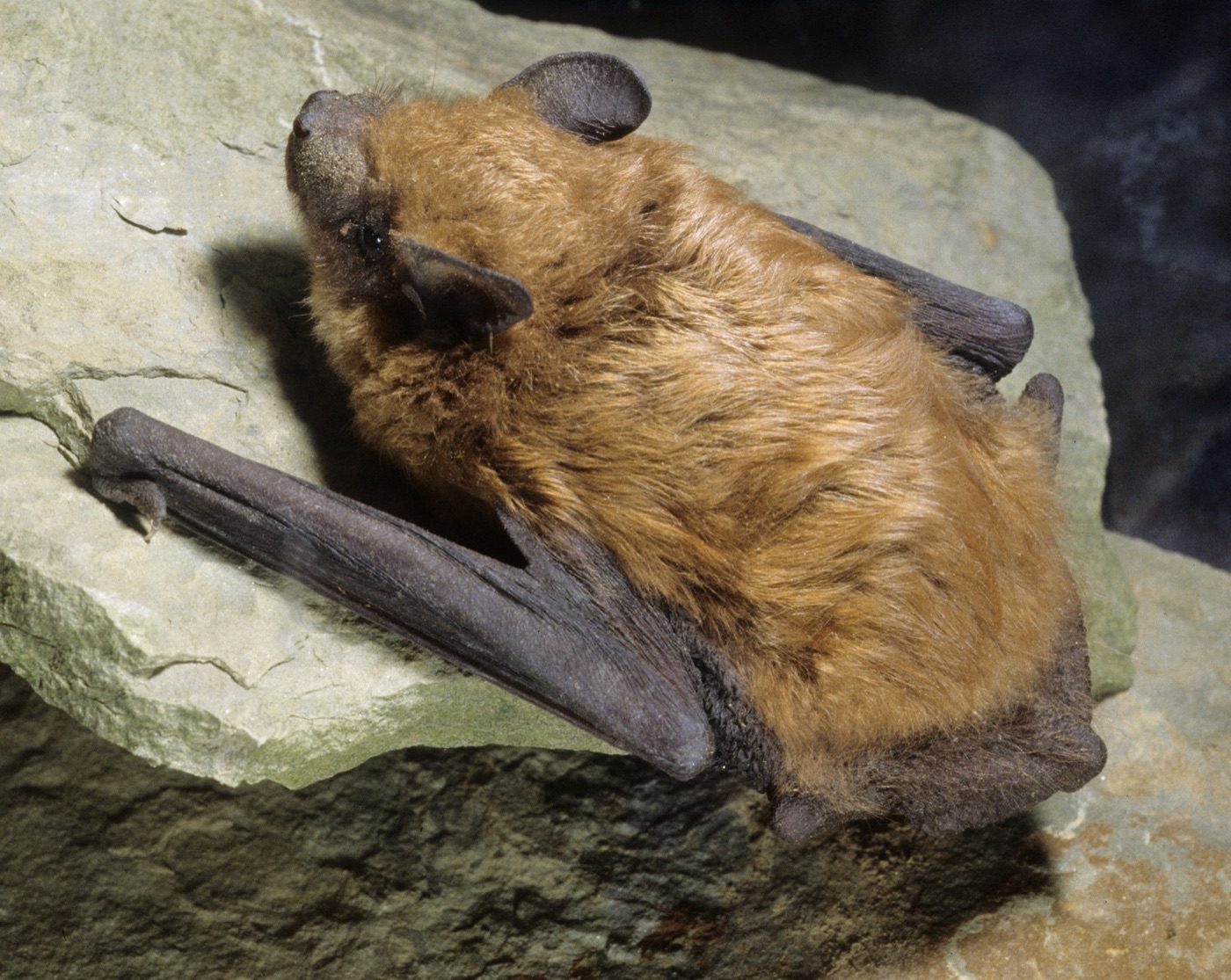
Wyoming Game and Fish counts 18 bat species in the state. From about November to March, insects disappear from the valley floor, and bats either migrate or hibernate. Game and Fish says large hibernation sites are not well known in Wyoming or the West, and there is evidence that bats here may hibernate in non-cavernous rocky habitat such as cracks in rocks or talus slopes, not just in caves and mines.
Western bats also hibernate in much smaller groups than eastern bats. University of Wyoming researcher Riley Bernard told the Jackson Hole News&Guide in November 2026 that some eastern caves hold hundreds of thousands of bats, while Wyoming's largest known overwintering site held hundreds.
Some bats skip the rocks and stay in buildings. Big brown bats in particular will spend the winter inside attics and wall voids of heated homes, where temperatures stay above freezing. In Jackson, which sits at about 6,237 feet with long, snowy winters, a heated log home, condo building or lodge can be the warmest roost around.
Four steps when a bat turns up indoors in winter
These steps follow the advice of Wyoming Game and Fish and the public health offices on both sides of Teton Pass.
Keep people and pets out
Close the door to the room and keep children and pets away. Wyoming Game and Fish says not to touch or handle bats.
Think about contact
If the bat touched anyone, or was in a room where someone was asleep, keep it for testing and call public health. A bat's small teeth may not leave a mark you can see.
No contact? Call before you release
Releasing a bat outside into subzero weather is unlikely to end well for the bat. Call Wyoming Game and Fish in Jackson at (307) 733-2321 for advice on what to do with a healthy bat in winter.
Find out where it came from
A bat indoors in winter usually means a roost in the attic or walls. Book an inspection so the building can be sealed properly in spring.
Winter is for inspection, spring is for exclusion
One-way doors only work when bats are flying out every night to feed. In midwinter a hibernating bat may not leave at all, and if it does there are no insects to eat. Wyoming Game and Fish advises using one-way doors on attics and other unused spaces in late summer or early fall, after the pups can fly. In practice, we exclude in spring (March through May) and from mid-August through October. See our guide to when to exclude bats in Teton County for the full calendar.
Winter is still useful. We can inspect the outside and attic, look for guano and staining, find gaps in log chinking, fascia, ridge vents and chimney flashing, and seal the openings that are clearly not in use. Then the exclusion devices go on the active openings once bats are moving again in spring. Eastern Idaho Public Health notes bats can get through a hole the size of a quarter, so the inspection has to cover the whole building.
White-nose syndrome has reached the Tetons
White-nose syndrome is a disease caused by the fungus Pseudogymnoascus destructans. It grows on bats during hibernation and makes them burn through their fat too fast, so they wake, leave their winter roost and die of starvation or exposure. Game and Fish says mortality has been as high as 99 percent at some large eastern winter roosts.
- 2018: The fungus was first detected in Wyoming in Goshen County, according to Wyoming Game and Fish.
- 2021: White-nose syndrome itself was confirmed in bats at Devils Tower National Monument, making Wyoming the 37th state with the disease.
- Winter 2023–24: The disease was first detected in Grand Teton National Park, Riley Bernard of the University of Wyoming told the Jackson Hole News&Guide.
- Summer 2026: Biologists found the fungus on 28 little brown bats in two colonies in Yellowstone, the first detection there. Game and Fish bat biologist Laura Beard said the fungus is now in most Wyoming counties.
The news from the Tetons is mixed. Bernard said researchers have not seen declines or obvious signs of the disease in captured Grand Teton bats, and she is part of a U.S. Geological Survey trial vaccinating bats in the Tetons. Little brown bats, the species most often found in local attics, are especially vulnerable, and they have only one pup a year.
For homeowners, this is one more reason to do exclusion humanely and at the right time. Sealing bats inside in winter, or trapping pups in summer, kills animals that are already under pressure. Game and Fish asks people to report bats flying in winter, and not to touch sick or dead bats.
Winter bat contacts in Jackson Hole and Teton Valley
Teton County, Wyoming
- Teton County Health Department, Environmental Health: 307-732-8490, after any contact with a bat.
- Wyoming Game and Fish, Jackson Regional Office: 420 North Cache, Jackson, (307) 733-2321. Report bats flying in winter, and sick, injured or dead bats.
- Jackson/Teton County Animal Shelter: 307-733-2139. Teton County Sheriff's Office animal control: 307-733-2331.
Teton County, Idaho
- Eastern Idaho Public Health epidemiologists: (208) 533-3152. Testing is free if a person or pet may have been exposed.
- Idaho Fish and Game, Upper Snake Regional Office: 4279 Commerce Circle, Idaho Falls, (208) 525-7290.
For the full exposure steps, see bats and rabies in Teton County. For local details, see our pages for Jackson, Wilson, Teton Village, Driggs and Victor, or learn about the bat species in Wyoming. Own a log home or cabin? See bats in log homes and cabins. You can also call (307) 522-1433 to book a winter inspection.
Bats in winter: common questions
Why is there a bat in my house in the middle of winter?
Usually because it was already living in the building. Big brown bats often spend the winter inside the walls or attic of a heated house, and a warm spell or heat from the living space can wake one up and send it looking for a way out, sometimes into the rooms below. One bat indoors in winter is often a sign of a roost somewhere in the building.
Can I just let a winter bat go outside?
Not if anyone may have touched it or it was in a room where someone was sleeping. Keep it for testing and call public health: Teton County Health Department Environmental Health at 307-732-8490 in Wyoming, or Eastern Idaho Public Health at (208) 533-3152 in Teton Valley. If there was clearly no contact, call Wyoming Game and Fish at (307) 733-2321 for advice, because a bat released into subzero weather is unlikely to survive.
Can bats be excluded from a house in winter?
We do not install one-way doors in midwinter. A hibernating bat cannot safely leave, and there are few insects to feed on if it does. Winter is a good time to inspect, find entry points and seal the openings bats are not using. The full exclusion waits for spring, roughly March through May, once bats are active again.
Is white-nose syndrome in Jackson Hole?
Yes. University of Wyoming bat researcher Riley Bernard told the Jackson Hole News&Guide that white-nose syndrome was first detected in Grand Teton National Park in the winter of 2023–24, and in 2026 the fungus was found in Yellowstone for the first time. Researchers have not yet seen population declines or obvious signs of the disease in Grand Teton bats.
What should I do if I see bats flying outside in winter?
Wyoming Game and Fish says bats flying during winter can be a sign of white-nose syndrome and asks people to report sightings. Call the Jackson Regional Office at (307) 733-2321. Do not touch or pick up a sick or dead bat.
Where these facts come from
Contact details and local facts on this page were checked against these official and local sources on November 9, 2026. Phone numbers and hours can change, so confirm with the agency before you go.
- Wyoming Game and Fish Department: What should I do if I find a bat?
- Wyoming Game and Fish: Why does Game and Fish study bats in the winter?
- Wyoming Game and Fish: White-nose syndrome detected in bats at Devils Tower National Monument
- Jackson Hole News&Guide (Nov. 6, 2026): Deadly fungus found on bats in Yellowstone
- National Park Service: Bat Projects in Parks, Grand Teton National Park
- Teton County, WY Health Department: Rabies
- Wyoming Game and Fish Department: Jackson Region
- Eastern Idaho Public Health (Sept. 9, 2025): Rabid bat found in Lemhi County
- Eastern Idaho Public Health: Office locations (Teton County office, Driggs)
- Idaho Fish and Game: Upper Snake Regional Office
- Town of Jackson: Jackson/Teton County Animal Shelter
- Teton County (WY) Sheriff's Office: Animal Control
- Wikipedia: Jackson, Wyoming (elevation and climate)
Teton region bat removal, done right.
Serving Jackson and the full Teton region since 2011. Phone consultation included. Written warranty on every exclusion.