Bats in Log Homes & Cabins
Log homes, homestead cabins and timber-frame houses are everywhere in Jackson Hole and Teton Valley, and they give bats more ways in than most houses. This guide covers where bats get into log buildings, why our winters make it worse, how exclusion works on round logs, and when to schedule it.
Why bats find their way into log homes
Log construction has a long history here. Bill Menor took up his homestead beside the Snake River near Moose in 1894, and the Park Service still keeps his cabin at the Menors Ferry Historic District. Many newer homes in Jackson, Wilson, Teton Village and Teton Valley use full logs, log siding or exposed timber, and older cabins are still lived in across the valley floor.
What makes a log wall different is that it never stops moving. The National Park Service's Preservation Brief 26 explains that chinking and daubing, the material between the logs, deteriorate from freeze-thaw, structural settlement, the logs drying, and a rate of thermal expansion and contraction that differs from the logs. It calls for continual inspection and regular patching. The same brief notes that long cracks along the grain, called checks, are a normal part of logs seasoning, but they can still let in moisture.
Our climate speeds this up. Teton County's building criteria use a -30°F winter design temperature, rate the area for "severe" weathering, and require an ice shield under roofing. Every cold snap and thaw works on the chinking. The Pennsylvania Game Commission notes bats can enter openings as small as one-half inch, so a chinking line that has pulled away a little is enough.
Eight common bat entry points on log homes
These are the places we check first on log and timber homes around the Tetons.
Separated chinking lines
Chinking that has pulled away from the top or bottom log leaves a long, dark gap. Brown staining along the line is a common sign.
Settling gaps over doors and windows
As logs shrink and settle, spaces open around window and door frames and their trim.
Corner notches and log ends
Saddle notches and butt ends at the corners trap gaps where logs cross, often hidden behind decks or shrubs.
Log-to-gable joints
Many log homes have framed, sided gables above the log walls. The seam between them is a frequent entry, high and out of sight.
Purlin and rafter ends
Exposed beams and rafter tails at the eaves leave gaps where they pass through the roof edge.
Ridge caps and roof vents
Same as any house: loose ridge vents and gable vents lead straight into attic and vaulted-ceiling spaces.
Stone chimneys
The joint between a stone chimney and the log wall opens as the logs move and the masonry does not.
Additions and porches
Where a frame addition, porch roof or garage meets the original log wall, the flashing and trim often leave a gap.
Seasonal cabins hide colonies longer
A lot of Teton region log homes sit empty for part of the year. In the Census Bureau's 2020–2024 American Community Survey, about 3,076 of 13,658 housing units in Teton County, Wyoming (about 23 percent), and 1,428 of 6,481 in Teton County, Idaho (about 22 percent), were held for seasonal, recreational or occasional use. A colony can raise pups in a cabin all summer with no one there to notice the evening flights or the droppings on the deck.
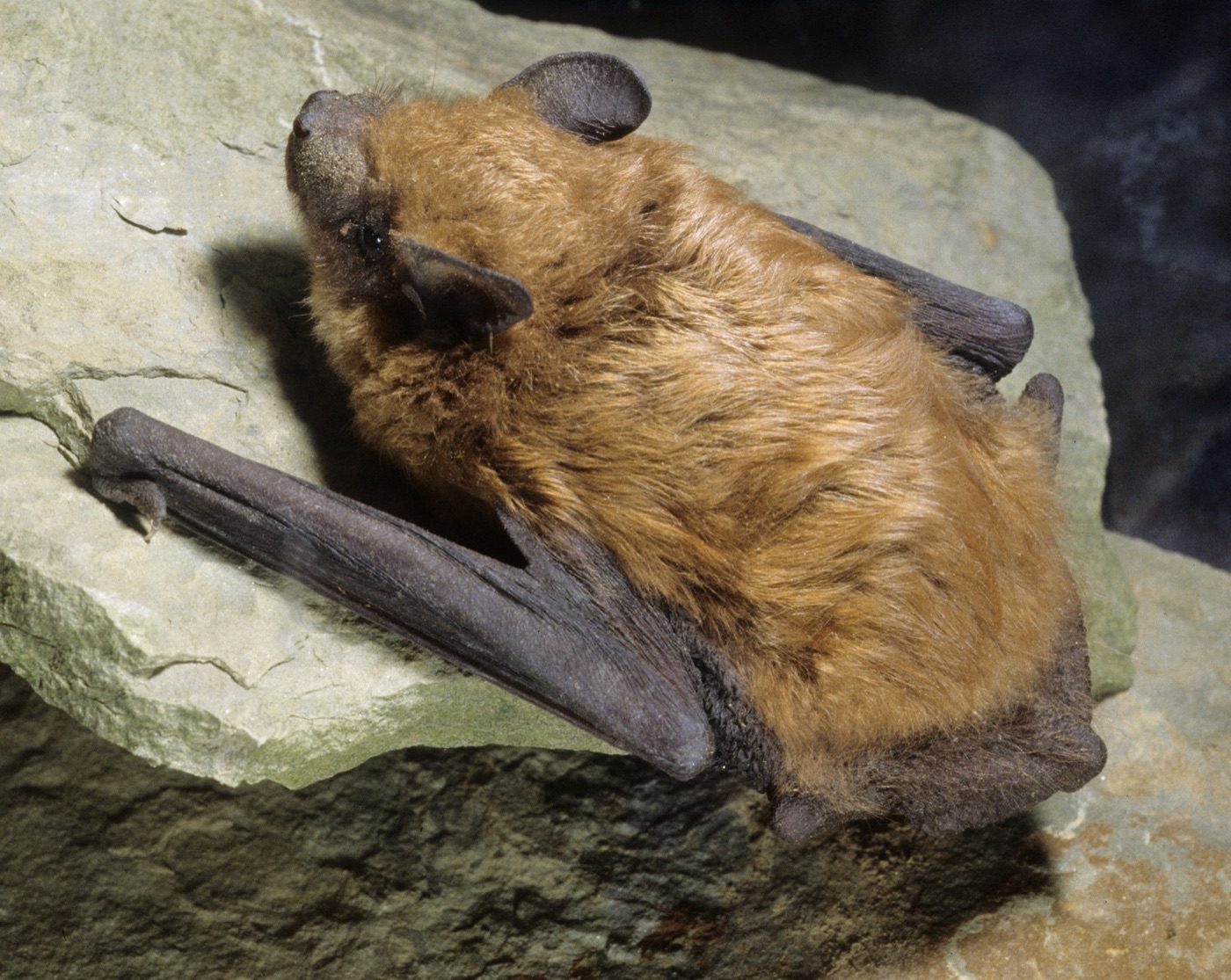
The most common bats in these buildings are little brown bats and big brown bats. The Park Service lists little brown bats as the most common species in Grand Teton National Park, followed by big brown bats, and Wyoming Game and Fish's bat plan reports that nearly all known little brown and big brown bat maternity roosts in its Wyoming surveys were in buildings. The Park Service has also inventoried its own buildings in Grand Teton to catalog existing and potential bat roosts.
Cabin-style lodging is not immune. In summer 2025, a colony was found in an attic above a row of cottage-style rooms at Jackson Lake Lodge, and the Wyoming Department of Health notified local health departments for more than 200 guests from 38 states and seven countries so they could be assessed for possible exposure. None of the bats tested were rabid, but state health officer Alexia Harrist said any bat in a building where people may be sleeping should be assessed.
When you open a cabin in spring, mice are the other concern. The Wyoming Department of Health warns that cabins and outbuildings closed up for winter can hold deer mice that carry hantavirus, and advises airing the space for 30 minutes and wet-cleaning, not sweeping or vacuuming, any droppings. Our guano cleanup page explains how we handle attics that have both.
How exclusion works on a log house
The method is the same humane one-way exclusion we use on any building, adjusted for logs.
- Find every gap, not just the busy one. We watch the evening emergence in season and inspect each wall, corner, gable and roof edge, because bats pushed out of one gap will try the next one.
- Tubes and shaped devices on round logs. Flat netting will not seal against a curved log. The Pennsylvania Game Commission notes tubes work best on rough walls such as log cabins and at corners. We fit the device to the gap and fasten it without cutting into the logs.
- Seal with materials that move. Once the bats are out, gaps on newer homes are sealed with flexible log-home sealant, backer rod or chinking matched to the house, so the seal stretches with the logs instead of cracking at the next cold snap. Hard gaps at trim and gables get hardware cloth, flashing or wood.
- Respect historic buildings. On older and historic log buildings, the Park Service advises keeping as much original daubing as possible and matching it, and says modern commercial chinking products are generally not suitable for visible historic work. We coordinate with the owner, and with a preservation contractor where needed.
- Clean up and warranty. Guano and soiled insulation are removed after the exclusion, and the sealed openings are covered by a written warranty. See bat-proofing for what is included.
Timing
Wyoming Game and Fish advises one-way doors in late summer or early fall, because in summer they can separate mothers from pups that cannot fly yet. That is timing guidance, not a legal summer ban. In Idaho, Idaho Fish and Game recommends evicting bats from buildings from early September to mid-October, and Idaho rules (IDAPA 13.01.06.200) list all bats as protected nongame wildlife. We plan around the pup season, roughly June through mid-August, exclude in spring and from mid-August through October, and inspect year-round. Winter is the time to find and seal gaps that bats are not using; our winter guide explains why. The full calendar is in when to exclude bats in Teton County.
If a bat gets inside your log home
Do not touch the bat. Close the room off and keep children and pets out. If anyone touched it or was asleep in the room, keep the bat for testing and call public health:
- Teton County, WY Health Department, Environmental Health: 307-732-8490.
- Eastern Idaho Public Health (Teton Valley), infectious disease line: (208) 533-3152.
- Lincoln County Public Health (Star Valley), Afton office: 307-885-9598.
- Sublette County Public Health, Pinedale: (307) 367-2157.
- Wyoming Game and Fish, Jackson Regional Office: (307) 733-2321, for injured bats or bats flying outside in winter.
For the full steps, see bats and rabies in Teton County. For local details, see our pages for Moran, Kelly, Wilson, Alta and Victor. Call (307) 522-1433 to book an inspection.
Bats in log homes: common questions
Why do bats like log homes and cabins?
Log walls move. The National Park Service's guide to log buildings says chinking cracks and loosens with settlement, the seasonal swelling and shrinking of logs, and freeze-thaw, so it needs regular inspection. In Jackson Hole's climate, with a -30°F design temperature, those small gaps open fast. A bat needs only about a half-inch opening, and the dark, warm space behind chinking, trim or a gable is a good roost.
Where do bats usually get into a log house?
The most common spots are separated chinking lines, gaps above window and door frames where logs have settled, corner notches and log ends, the joint where log walls meet a framed gable, exposed purlin and rafter ends at the eaves, ridge caps, and the joint between a stone chimney and the logs. Brown staining and small piles of droppings below a gap usually point to the entry.
Can you exclude bats from a log home without damaging the logs?
Yes. One-way devices are fastened over the active gaps without cutting into the logs. The Pennsylvania Game Commission notes that exclusion tubes work best on rough walls such as log cabins, where flat netting will not seal. After the bats are out, gaps are sealed with materials matched to the house, such as flexible log-home sealant or chinking on newer homes. On historic log buildings, the Park Service advises matching the original daubing rather than modern commercial chinking.
When can bats be excluded from a log cabin?
Not while flightless pups are inside, roughly June through mid-August. Wyoming Game and Fish advises one-way doors in late summer or early fall, and Idaho Fish and Game recommends early September to mid-October. In practice we exclude from mid-August through October and in spring, and we inspect year-round. Winter is a good time to find and seal unused gaps.
I only use my cabin in summer. How do I know if bats are in it?
Look for droppings on window sills, decks and floors when you open up, brown staining at the log corners or eaves, and bats leaving at dusk. When you open a closed-up cabin, also follow the Wyoming Department of Health's hantavirus advice: air it out for 30 minutes and do not sweep or vacuum mouse droppings. If you find a bat inside where someone slept, call public health before releasing it.
Log homes and cabins we serve
Log and timber homes on both sides of Teton Pass.
Guano cleanup
Bat guano cleanupBat-proofing
Bat-proofing and exclusionBats in winter
Bats in winter in Jackson HoleMoran, WY
Bat removal in MoranKelly, WY
Bat removal in KellyWilson, WY
Bat removal in WilsonDriggs, ID
Bat removal in DriggsBat species
Bat species in WyomingWhere these facts come from
Contact details and local facts on this page were checked against these official and local sources on November 27, 2026. Phone numbers and hours can change, so confirm with the agency before you go.
- National Park Service Preservation Brief 26: The Preservation and Repair of Historic Log Buildings (chinking and daubing, checks, settlement, seasonal expansion and freeze-thaw)
- National Park Service, Grand Teton: Menors Ferry Historic District (Bill Menor's 1894 homestead cabin)
- Teton County, WY Building: Climatic and geographic design criteria (-30°F winter design temperature, severe weathering, ice shield required, Climate Zones 7 and 8 ceiling R-60)
- Pennsylvania Game Commission: Bats in Buildings, A Guide to Safe & Humane Exclusions (half-inch openings; exclusion tubes work best on rough walls such as log cabins)
- U.S. Census Bureau ACS 2020–2024 5-year, table B25004 Vacancy Status, via Census Reporter (seasonal, recreational or occasional-use homes in Teton County, WY and Teton County, ID)
- National Park Service, Grand Teton: Wildlife and Rabies (bat species in the park, what to do with a bat in your room)
- National Park Service: Bat Projects in Parks, Grand Teton National Park
- Wyoming Game and Fish Department: A Conservation Plan for Bats in Wyoming (Hester & Grenier 2005; 18 species: 12 resident, 4 peripheral, 2 accidental; species accounts incl. Priday & Luce 1999 roost records)
- Wyoming Public Media (Sept. 4, 2025): Guest tracing complete after mass rabies scare at Jackson Lake Lodge
- Wyoming Department of Health (Apr. 8, 2025): Prevent hantavirus during spring cleaning (cabins and outbuildings closed up for winter)
- Wyoming Game and Fish Department: What should I do if I find a bat?
- Idaho Fish and Game: See a bat in or around your home? Don't panic
- IDAPA 13.01.06.200: Protected nongame species (Bats, all species)
- Teton County, WY Health Department: Rabies
- Eastern Idaho Public Health: Office locations and infectious disease line (208) 533-3152
- Lincoln County, WY: Public Health contact (Kemmerer office 520 Topaz St, Ste 109, 307-877-3780; Afton office 307-885-9598)
- Sublette County, WY: Public Health (380 Faler Avenue, Pinedale, 307-367-2157)
- Wyoming Game and Fish Department: Jackson Region
Teton region bat removal, done right.
Serving Jackson and the full Teton region since 2011. Phone consultation included. Written warranty on every exclusion.